
Construction Steps
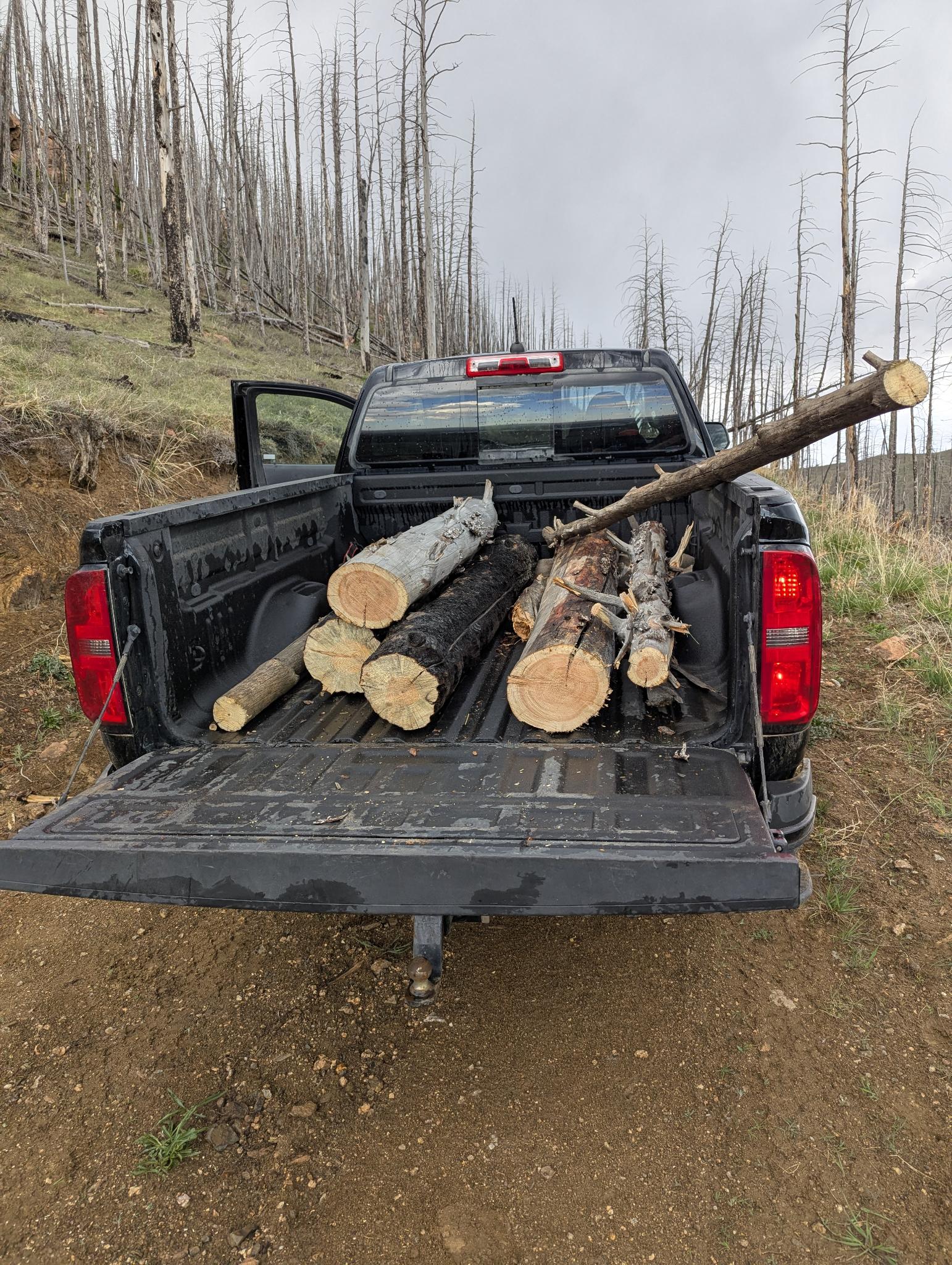
- Locate suitable dead trees for harvest. Smaller trees between 3-6 inches in diameter are perfect for this application. Potentially hazardous trees are prioritized for harvest - trees that are near roadways which could blow over in a wind storm.
- Cut and transport logs. Once suitable trees are found, they are cut down with an electric chainsaw and loaded up into a truck for transportation to the farm area.
- Plan out raised bed. We start by using driveway markers to figure out where raised beds should be located, how many metal T-posts are required, and how long each log needs to be to build the walls.
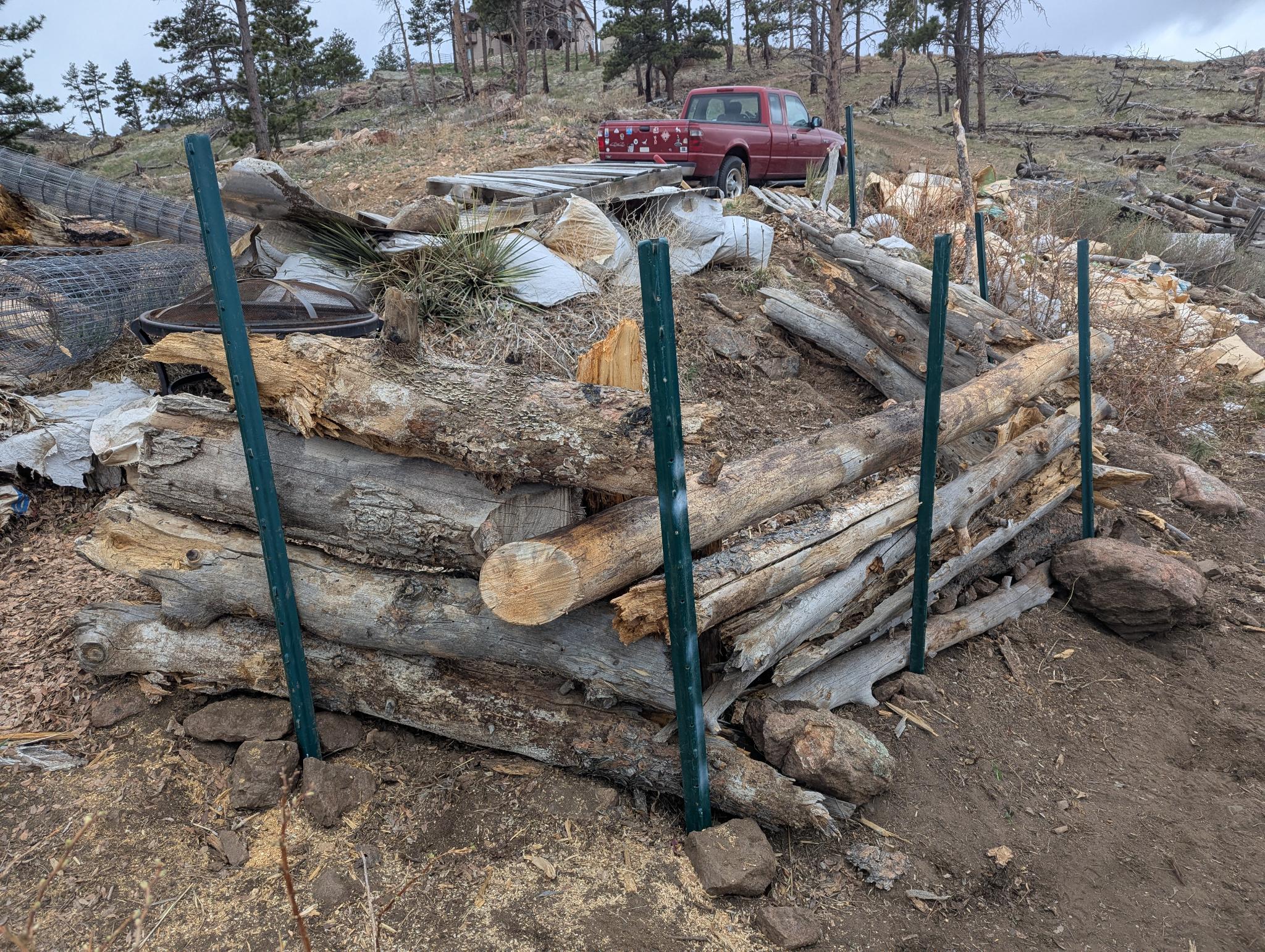
- Pound metal posts. Metal T-posts are used with a post pounder to create a basic frame which logs are placed into.
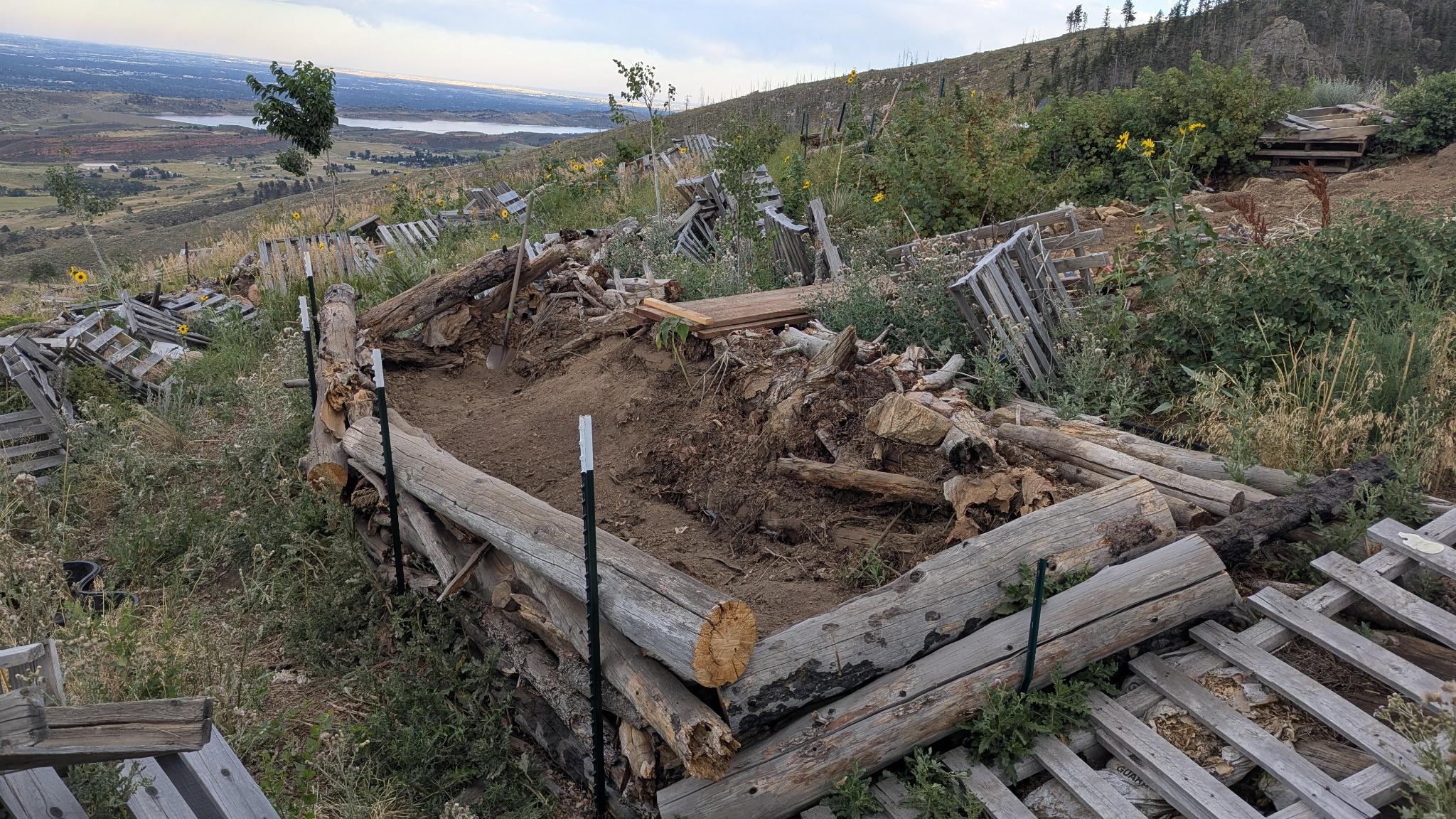
- Arrange logs into raised bed. Logs are placed on the uphill side of the metal posts, relying on gravity to stay in place. The walls are layered together like Lincoln Logs.
- Fill raised bed with soil. Soil is sourced from the surrounding area and compost is brought from town to break down and fertilize the new raised beds.
- Plant crops. Finally once everything is built, we can actually put some food in the raised beds!
Gallery
See also:
Nature
Terraces